When using an online gaming platform, protecting your personal information is just as important as understanding the games and services available. From creating an account to accessing your dashboard and managing transactions, users share information that needs to be handled responsibly.
Playinmatch is an online gaming and sports betting platform where users may need to provide personal details, contact information and account credentials. Understanding how this information is collected, stored and protected can help users make informed decisions about their online privacy.
Whether you are exploring the Playinmatch Register process, accessing your account through Playinmatch Login, or reviewing promotional offers such as the Playinmatch Bonus, knowing how account protection works is essential.
This guide explains the data protection measures described in published Playinmatch privacy policies, the information users should safeguard and the practical steps that can help reduce online security risks.
1. How Playinmatch Handles Personal Information
Personal information is generally collected when users register, access account services, verify their identity or contact Playinmatch customer support.
According to a published Playinmatch privacy policy, the platform may collect several categories of information, including:
- Personal details: Name, mobile number, email address and date of birth.
- Account information: Registration details, login credentials and account activity.
- Financial information: Payment details and transaction-related information.
- Verification documents: Identity or address documentation when required.
- Technical information: IP address, device type, browser information and session activity.
The policy describes uses such as account management, identity verification, transaction processing, customer assistance and compliance checks.
For users, understanding what information is requested and why it is needed is an important part of protecting personal privacy.
Before submitting sensitive information, always confirm that you are using the intended platform and review the privacy policy applicable to that specific website.
2. Data Encryption and Secure Information Transmission
One of the main concerns for online users is whether their personal details can be intercepted while using a website.
Published Playinmatch privacy statements describe several security measures intended to protect user information.
SSL encryption and secure connections
SSL/TLS encryption helps protect information transmitted between a user’s browser and a website’s server. This is especially important when entering sensitive details through account registration and login forms.
Playinmatch-branded privacy policies describe encryption as part of their security practices. However, these statements are not independent technical verification of every Playinmatch-related domain.
Users should check for HTTPS, confirm the website address and avoid entering passwords on suspicious pages. A padlock or HTTPS connection alone does not prove that a website is trustworthy.
Secure data storage
The published privacy information also refers to secure storage systems and measures designed to limit unauthorized access to personal information.
These measures are intended to reduce the risk of sensitive data being exposed, although the precise storage architecture and security effectiveness cannot be confirmed from the public policy alone.
3. Playinmatch ID Security and Account Protection
Your Playinmatch ID is an important part of your account identity. It may be used to access your gaming dashboard, manage account settings and communicate with customer support.
Because an account can contain personal details and transaction records, protecting login credentials should be a priority.
Strong password practices
A strong password is one of the simplest ways to improve account safety. Users should:
- Create a unique password that is not used on other websites.
- Use a long combination of unrelated words or characters.
- Avoid obvious information such as birthdays and mobile numbers.
- Never share passwords with friends, agents or unknown support contacts.
- Change the password immediately if account compromise is suspected.
Account verification
Some Playinmatch registration pages describe verification through an OTP sent to a registered mobile number or email address. Identity verification may also be requested in certain circumstances.
These processes can help confirm account ownership, but users should verify which controls are actually available on the website they use.
Important: Never disclose a login OTP or password to someone claiming to provide Playinmatch technical support.
4. How to Keep Your Playinmatch Login Secure
The Playinmatch Login process is the entry point to your account. Taking a few precautions before signing in can help reduce the chances of unauthorised access.
Check the website URL
Fake websites sometimes imitate the appearance of legitimate gaming platforms. These pages may ask users to enter passwords, mobile numbers or payment details.
Before logging in, check the website address carefully and avoid unfamiliar links shared through social media groups or unsolicited messages.
Avoid shared or public devices
Logging in through public computers or unfamiliar devices can increase security risks, particularly if passwords are saved automatically.
If you must use a shared device, avoid saving credentials and sign out after finishing your session.
Watch for unusual account activity
Unexpected account changes, unfamiliar transactions or unexplained login issues may indicate that someone else has accessed your information.
If you notice suspicious activity, stop entering sensitive information, secure your associated email account and contact support through a verified channel.
5. Personal Data Protection During Playinmatch Registration
The Playinmatch Register process is often the first time a user provides personal information to the platform.
Registration details may include a name, contact number, email address and other information required for account verification.
To reduce privacy risks during registration, users should consider several important precautions.
Provide accurate information
Correct account details can help with identity verification and future recovery requests. However, personal information should only be entered into verified forms.
Understand document verification
Some online gaming platforms request identity documents as part of their Know Your Customer (KYC) procedures.
Before uploading Aadhaar, PAN, bank statements or other sensitive documents, verify the platform operator, the reason for the request, the applicable privacy policy and whether the service is legally available in your jurisdiction.
Avoid unofficial registration agents
Do not send identification documents, banking information or verification codes to individuals whose association with Playinmatch cannot be independently confirmed.
Account creation should never require disclosing your banking PIN or sharing control of your personal email account.
6. How Playinmatch Handles Financial and Transaction Information
Financial information requires additional care because account records may include deposits, withdrawals, payment references and linked payment details.
Playinmatch’s published privacy information states that financial data may be processed for transactions, account administration and compliance purposes.
It also describes sharing certain information with third-party service providers, including payment processors and fraud-prevention services.
From a user’s perspective, financial account safety involves three important considerations.
Protecting payment credentials: Never share UPI PINs, internet banking passwords or complete authentication codes.
Reviewing transaction records: Check account statements and payment histories for activity you do not recognise.
Using verified payment channels: Avoid transferring money to personal accounts or payment addresses sent by unknown individuals claiming to represent the platform.
Even when a website states that it uses encryption, users should remain alert to payment scams and fraudulent requests.
7. Does Playinmatch Share Personal Information with Third Parties?
Online platforms sometimes rely on outside providers to operate important services.
A published Playinmatch privacy policy identifies possible data-sharing situations involving:
- Payment processing and account transactions.
- Fraud detection and prevention.
- Technical infrastructure and analytics.
- Customer support.
- Legal and regulatory requests.
- Business transfers, where applicable.
The policy also describes confidentiality obligations for certain service providers.
Users should understand that data protection does not necessarily mean information is never shared.
The important questions are what data is shared, why sharing is necessary, how long information is retained and what rights users have regarding their personal details.
8. How Playinmatch Bonus Offers Relate to Account Privacy
Promotional offers are another area where users should remain cautious about personal information.
A Playinmatch Bonus advertisement may appear through websites, messaging applications, social media posts or promotional campaigns.
However, not every message using the Playinmatch name is necessarily associated with the actual platform operator.
Scammers may advertise attractive offers to encourage users to visit fake login pages or disclose sensitive details.
Before responding to a promotional message, confirm the source, read the applicable bonus terms and avoid submitting account credentials through unfamiliar links.
Legitimate promotional eligibility checks should never require you to share your password, OTP or banking PIN with an individual.
9. How Playinmatch Uses Cookies and Technical Data
Cookies are small pieces of information websites can store in a browser. Depending on their purpose, they may support login sessions, preferences, analytics or advertising.
Playinmatch’s published privacy policy describes essential, performance, personalization and advertising cookies.
It also states that users can adjust certain cookie preferences through browser settings, although disabling cookies may affect website functionality.
Users who want additional privacy can review their browser’s cookie permissions, remove unnecessary stored data and avoid allowing unknown third-party websites to retain tracking information.
10. Practical Steps to Protect Your Playinmatch Account
Even when a platform provides security measures, users play an important role in protecting their personal information.
Here is a practical checklist for improving Playinmatch account safety.
Account Security Checklist
Interactive checklist
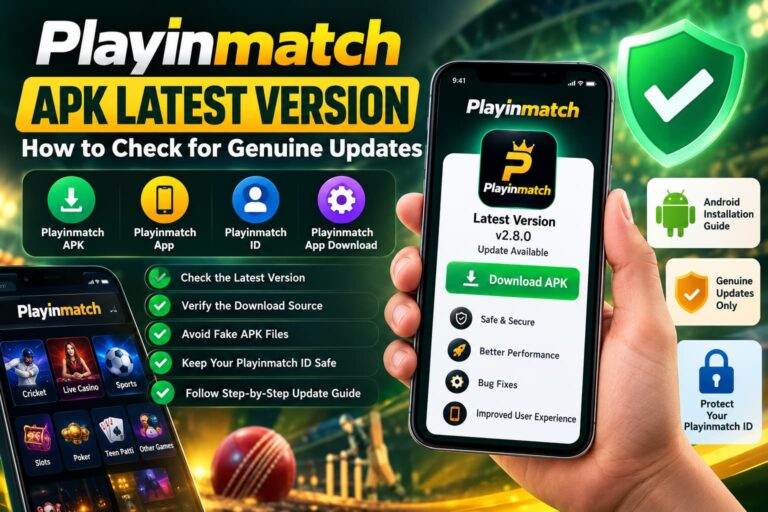
0 of 8 completed. Reset: Use a unique, strong account password. Verify the website address before logging in. Keep OTPs and banking PINs private. Avoid unofficial APK files and registration links. Review account and payment activity. Sign out on shared devices. Verify support contacts before sharing information. Review the current privacy policy
These habits help reduce exposure to phishing, credential theft and unauthorized account activity.
11. What Should You Do if Your Playinmatch Account Is Compromised?
If you suspect unauthorised access to your Playinmatch ID, acting quickly may help prevent further damage.
Start by changing your password through a verified account-recovery channel, if that option is available.
Next, review any associated email accounts and update credentials that may have been exposed. Check your transaction records for unfamiliar activity and preserve relevant screenshots or transaction references.
If financial information may have been compromised, contact your bank or payment provider directly.
Finally, report the issue through a customer-support channel independently verified on the website you intended to use.
Avoid trusting someone simply because they claim to be a Playinmatch recovery agent. Account recovery should not require giving another person access to your OTP or banking credentials.
12. Understanding Your Privacy Rights
Personal data protection also involves understanding how much control users have over their information.
A published Playinmatch privacy policy describes options to request access to personal data, correct inaccurate information, request deletion or restriction of processing, and withdraw certain permissions.
The availability and scope of these rights depend on the applicable privacy policy, local law and any legitimate data-retention obligations.
If you no longer want to use an account, contact the relevant operator to understand its account-closure and personal-data deletion procedures.
FAQs About Playinmatch Account Security
1. Is my personal information safe on Playinmatch?
Published Playinmatch privacy policies describe encryption, access controls and security assessments. However, a privacy policy alone cannot independently guarantee that a particular website or account is secure. Users should verify the platform and follow appropriate account-safety practices.
2. How can I protect my Playinmatch ID?
Use a unique password, avoid sharing login credentials, verify website addresses and regularly review account activity. Never disclose authentication codes to unknown individuals.
3. Does Playinmatch protect login information?
Playinmatch-branded privacy information describes security measures intended to protect user data. The exact authentication controls and their implementation should be confirmed on the specific website being used.
4. Is it safe to register for Playinmatch using a mobile number?
A mobile number may be used for registration and verification. Before submitting it, verify the website operator and read the applicable privacy policy. Avoid registration forms shared through suspicious links.
5. Can someone access my Playinmatch account with my ID?
Knowing an account ID alone should not normally grant access to a properly secured account. However, leaked passwords, phishing attacks or compromised verification codes can create risks. Protect all authentication information.
6. Does the Playinmatch Bonus require personal information?
Some promotional eligibility checks may involve account verification. Always review the offer’s conditions and avoid providing sensitive credentials to unknown agents or promotional websites.
7. What should I do if I forget my Playinmatch Login password?
Use the password-recovery process provided by the verified account operator, if available. Avoid unofficial account-recovery services that request OTPs, passwords or payment details.
8. Can I request deletion of my Playinmatch account information?
A published Playinmatch privacy policy describes account and data-deletion requests. Whether all information can be deleted depends on the operator’s obligations and applicable laws.
Conclusion on Playinmatch account information
Protecting personal and account information is an important part of using any online platform, including Playinmatch.
Published privacy policies associated with Playinmatch describe data encryption, secure storage, access controls and identity-verification practices intended to safeguard user information.
However, account security also depends on the precautions individuals take. Protecting your Playinmatch ID, checking the authenticity of Playinmatch Login pages, providing information carefully during Playinmatch Register, and avoiding suspicious Playinmatch Monopoly links can help reduce privacy risks.
Before sharing personal or financial details, users should verify the platform’s identity, check the latest privacy policy and understand the legal requirements applicable to online gaming in their location.
A safer online experience begins with informed decisions, responsible data handling and consistent account-security habits.